

Cleanroom Construction
A cleanroom is used in industries that involve manufacturing or processes requiring a high level of cleanliness. In this context, “dirt” does not refer to visible stains, but to microscopic particles — especially dust particles as small as 0.3 microns — that must be carefully controlled. In addition, cleanrooms regulate humidity, temperature, and air pressure to maintain the required environmental conditions.
The highest level of cleanliness is essential in the microchip and semiconductor industry, where components are so delicate that even a single dust particle can cause a malfunction. For this reason, chips are manufactured inside carefully filtered and tightly controlled cleanrooms.
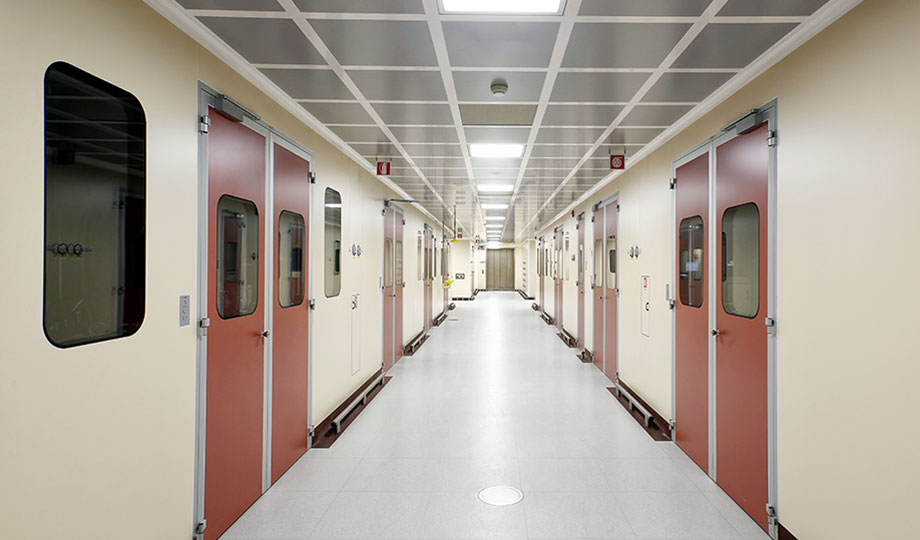
A cleanroom, like any other room, consists of walls, a ceiling, and a floor, and includes doors, lighting fixtures, and panels. However, its uniqueness lies in its structure, integrated systems, and specialized infrastructure. The cleanroom is equipped with an HVAC system and an air handling unit, transfer hatches (airlocks), and monitoring and measurement devices. It is constantly monitored, allowing real-time assessment of its cleanliness level.
The team responsible for building the cleanroom includes site managers, engineers, and construction professionals, all of whom are well-versed in the regulations and fully familiar with the required standards for proper cleanroom construction.
The construction of a cleanroom, along with all its infrastructure, is carried out with meticulous planning. A detailed program is developed that considers all required standards. The process includes architectural design of all systems, such as electrical, plumbing, and HVAC.
In addition, both international and local certifications must be obtained to verify the room’s compliance. The amount of air circulated in the cleanroom must meet the relevant standards and be adjusted according to the required cleanliness level and the specific processes and materials used in the room.
Several Important Parameters Are Taken Into Account
Several important parameters are taken into account during the process:
Pressure – A cleanroom must maintain controlled air pressure relative to atmospheric pressure in order to direct the flow of particles and air. For this reason, the room is sealed, and the HVAC system is designed with a controlled air inlet.
Particles – A cleanroom operates with a closed-loop air system that filters the air using HEPA filters and an HVAC unit that controls air volume and removes dust particles.
Temperature – Each manufacturing industry requires different temperature levels to create optimal production conditions. The cleanroom’s HVAC system precisely adjusts the temperature to meet specific process needs.
Humidity – Depending on the process, humidity control may be required. In some industries, high humidity can damage the product or promote bacterial growth. In others, a humid environment is essential to prevent static electricity that could interfere with production.
Looking to Build a Cleanroom ?
So, We Understand That a Cleanroom Must Be Highly Sterile
With precise control of particle levels and humidity, tailored to the production purpose.
But how is cleanliness actually measured?
A cleanroom is monitored using equipment that allows real-time measurement of airborne particle concentration per cubic meter. The measured results must comply with the cleanliness standards required for the relevant industry.
Cleanroom Planning and Setup
The cleanroom planning process is highly detailed. It includes needs assessment, infrastructure design, selection of specialized furniture and garments, and equipment that meets strict industry standards.
Factories using office equipment, lab tools, or cleaning devices must ensure that all products are specifically designed for cleanroom environments, offering high sterility and made from compatible materials.
Professional Execution Is a Must
Building a cleanroom requires skilled professionals to match the room’s design to the organization’s production needs, and to achieve desired results from machinery, processes, and products.
Cleanroom construction must meet stringent international standards.
When selecting a company to perform the cleanroom build, be sure to examine:
How long has the company been active?
What projects has it completed?
Who are its engineers and specialists?
What accompanying services does it provide?
What do client reviews and testimonials say?
Planning a New Facility? Important Notes to Remember:
Whether you’re building a new plant, facility, or lab due to production growth, regulatory compliance, lease issues, or a shift from startup to manufacturing stage — keep these in mind:
You will live with your facility for many years – Don’t leave all the planning to consultants. Their work ends; yours continues.
Have a long-term vision – Create a 10-year plan before hiring consultants. Many simply replicate your current layout.
Identify your bottlenecks – Plan how to solve them during the design phase (e.g., larger equipment, more efficient processes).
Leave space for future expansion – Ensure expansion zones are located near your current bottlenecks.
Involve people from the floor, not just managers – Senior staff know the big picture, but often lack direct operational insight. Consultants need the full picture to design effectively.
What Is a Cleanroom?
A cleanroom is a controlled environment used to manufacture pharmaceutical products or medical devices that require sterile conditions to minimize contamination risk beyond the product’s release criteria.
Products made in cleanrooms are highly sensitive — even a single dust particle can disrupt the manufacturing process.
Today, cleanrooms are widely used:
You’ll find them in high-tech companies like Intel, in pharmaceutical factories like Teva, in aerospace industries, and in research institutes such as the Weizmann Institute and major universities.
What Should Be Considered Before Building a Cleanroom?
The first step for any company planning to build or design a cleanroom is to clearly define the purpose of the room and what it intends to produce.
There are many types of cleanrooms, each serving a unique purpose, with its own design standards and specialized tools.
For example:
In the pharmaceutical industry, the focus is on maximum sterility and preventing bacterial growth, which requires smooth, seamless surfaces with no cracks.
In glass manufacturing, however, the emphasis is on low humidity and lower temperatures to preserve glass adhesion during production.
Build a Cleanroom Only with Experts
Cleanroom construction is a highly complex process — often referred to as “the high-tech of the construction industry.”
It requires:
Expertise
Precision
And deep understanding of factors such as:
Environmental conditions
Airborne particles
Temperature
Air pressure and flow
Noise
Lighting levels
Construction materials
That’s why it’s essential to partner with a specialized company to lead the project — ensuring that the cleanroom is built to the highest international standards.
Huskytech is a Cleanroom Construction Expert
Huskytech Ltd. provides comprehensive solutions for cleanrooms.
The company offers end-to-end service — from initial specification and engineering design to full completion of construction. But the partnership doesn’t end there. Clients receive ongoing support, including customized maintenance solutions tailored to their operational needs.
By choosing Haskitech, you ensure collaboration with an industry-leading company known for its full project support and trusted service to top-tier companies.
Haskitech has successfully delivered cleanroom solutions across multiple sectors, including biotech, pharmaceuticals, electronics, food production, and more.
The company also collaborates with leading suppliers and partners in the field to provide a full-service offering — including the supply of complementary products and services.

